Carlo Koch · 24 October 2026
Examining Shifts in Local Commerce Patterns Following Large Scale Harbor Redevelopment Projects
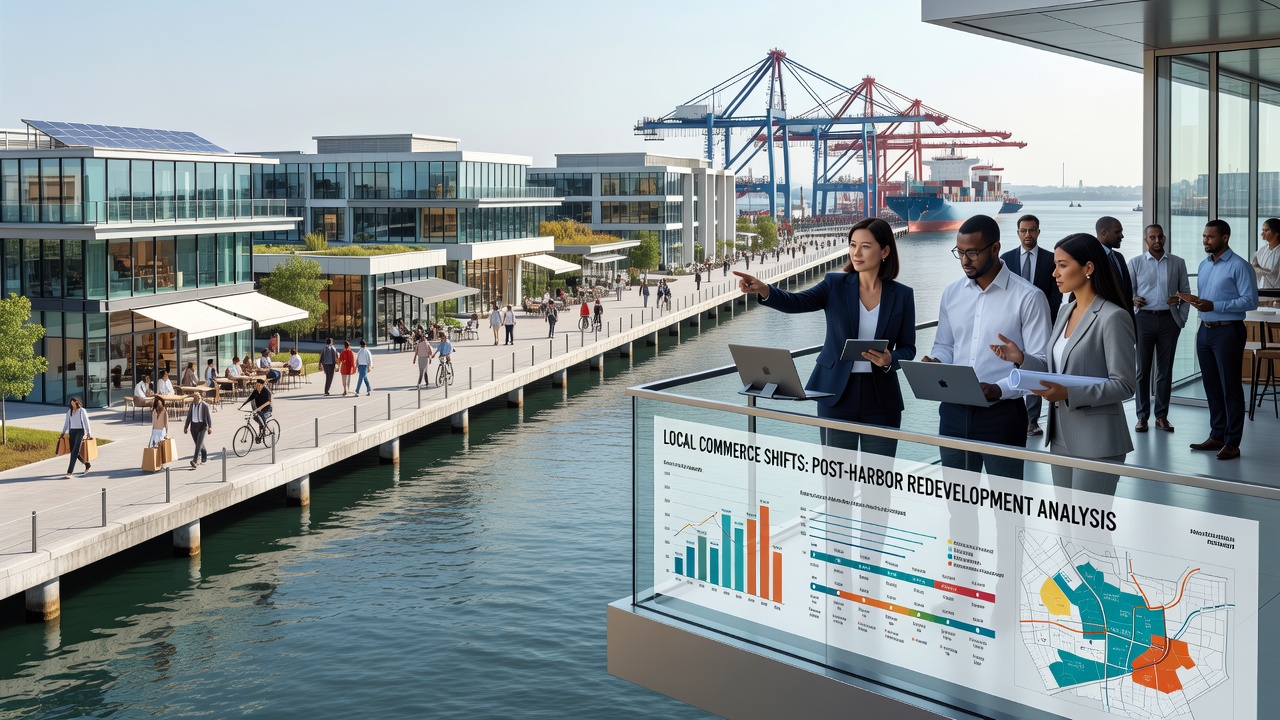
Harbor redevelopment projects have transformed industrial waterfronts into mixed-use districts across multiple continents, and observers note measurable changes in how local businesses operate once construction concludes. Cities from Rotterdam to Vancouver have documented alterations in retail density, service sector growth, and foot traffic patterns that follow these infrastructure shifts, while data collected over the past decade shows consistent movement away from traditional port-related trade toward tourism, hospitality, and residential retail.
Historical Context of Port Transformations
Many large-scale harbor projects began as responses to declining cargo volumes in the late twentieth century, and authorities responded by rezoning land for residential towers, public promenades, and commercial plazas. European ports led early efforts in the 1990s, whereas North American and Australian sites accelerated similar work after 2010 once funding mechanisms matured. Researchers tracking these changes have recorded how former warehouse zones convert into clusters of cafes, boutique shops, and professional offices once dredging and structural work finish.
Measured Changes in Retail and Service Sectors
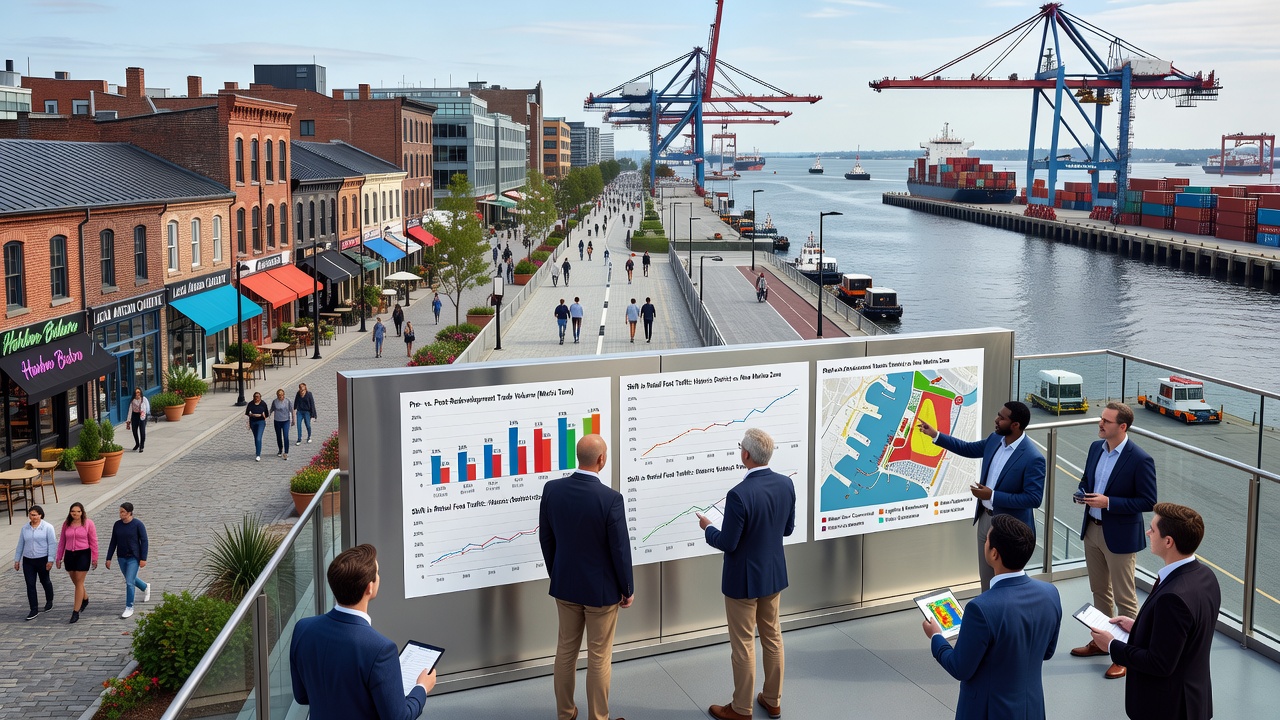
Commerce data collected after redevelopment reveal increases in hospitality establishments and decreases in heavy equipment suppliers or bulk storage facilities. Studies conducted in port-adjacent neighborhoods indicate that small-scale retail outlets often relocate to higher-traffic pedestrian corridors created during the redesign phase, while logistics firms move to inland terminals. Figures released by transport ministries show that service employment rises in the first three years following project completion, particularly in food service and guided tour operations that capitalize on new public spaces.
Case Examples from Different Regions
One redevelopment along the North Sea coast produced a documented rise in overnight visitor spending within two kilometers of the former docklands, and local chambers of commerce recorded new restaurant openings outpacing closures by a three-to-one margin. In contrast, a Pacific Northwest project completed in 2022 saw initial drops in marine supply stores followed by steady growth in fitness centers and coworking spaces once residential units filled. Australian authorities tracking a similar overhaul in 2024 noted parallel patterns, with coffee vendors and art galleries occupying ground-floor commercial space that previously housed freight offices.
These examples illustrate how geography and prior land use influence outcomes, yet common threads emerge when analysts compare pre- and post-redevelopment business registries. And data compiled across multiple sites continues to show that anchor attractions such as museums or ferry terminals accelerate surrounding commercial activity more reliably than standalone residential construction.
Employment and Business Formation Trends
Employment statistics from redeveloped zones indicate net job gains in the leisure and retail categories, although some legacy maritime trades experience relocation pressures. Business formation records reveal elevated startup rates for experiential services such as kayak rentals and food trucks, whereas traditional wholesale operations consolidate elsewhere. Reports prepared by regional planning agencies document that lease rates for waterfront commercial space rise steadily once infrastructure work ends, prompting some independent operators to seek subsidies or shared-space arrangements.
October 2026 Data Release and Ongoing Monitoring
Authorities in several jurisdictions plan to release updated commerce metrics in October 2026 that will cover the five-year mark after recent completions. These forthcoming figures are expected to clarify whether initial service-sector gains stabilize or whether further consolidation occurs as residential populations mature. Monitoring programs already in place track pedestrian counts, sales tax receipts, and vacancy rates, providing granular evidence that planners use to adjust zoning incentives and parking policies.
Conclusion
Harbor redevelopment continues to reshape local commerce through predictable yet regionally varied mechanisms, and longitudinal data sets now allow researchers to separate temporary construction effects from longer-term business pattern shifts. Continued collection of employment, lease, and visitor statistics will refine understanding of how these waterfront transformations influence surrounding neighborhoods well into the next decade.