Taylor Neumann · 10 October 2026
Community-Led Art Installations Breathing New Life into Overlooked Harbor Edges
Community groups in port cities have turned neglected harbor edges into sites for large-scale art projects that draw on local histories and materials, and these efforts often start with residents mapping out forgotten piers, warehouses, and breakwaters before inviting artists to collaborate on permanent or temporary works. Data from municipal planning departments show increased foot traffic and small business activity near completed installations in several North American and European harbors, while similar patterns appear in Australian and Asian ports where community input shaped the final designs.
Origins and Early Projects
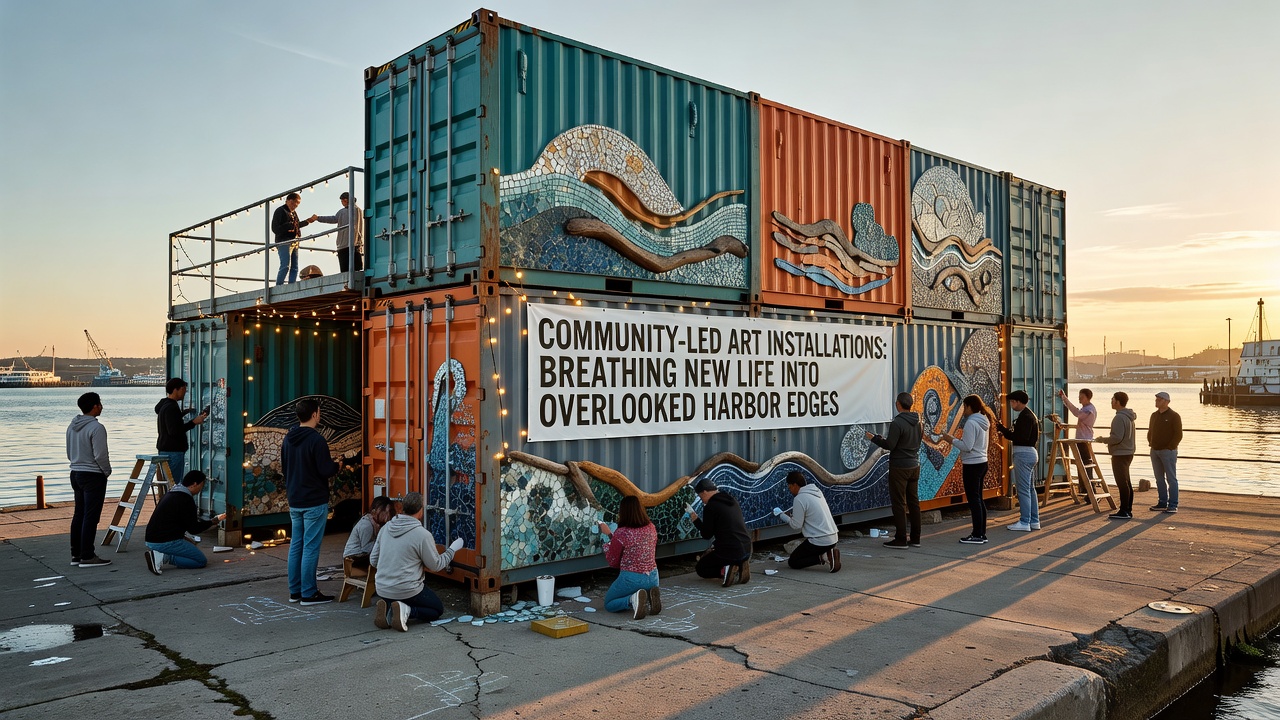
Researchers at the University of British Columbia documented how waterfront neighborhoods in Vancouver organized the first community meetings in 2018 to address vacant ferry terminals, and those sessions led to a series of murals and light-based sculptures installed along the shoreline by 2021. The same study noted that participation rates climbed when organizers offered workshops on welding, mosaic techniques, and digital projection mapping, skills that later transferred to paid work on other municipal contracts.
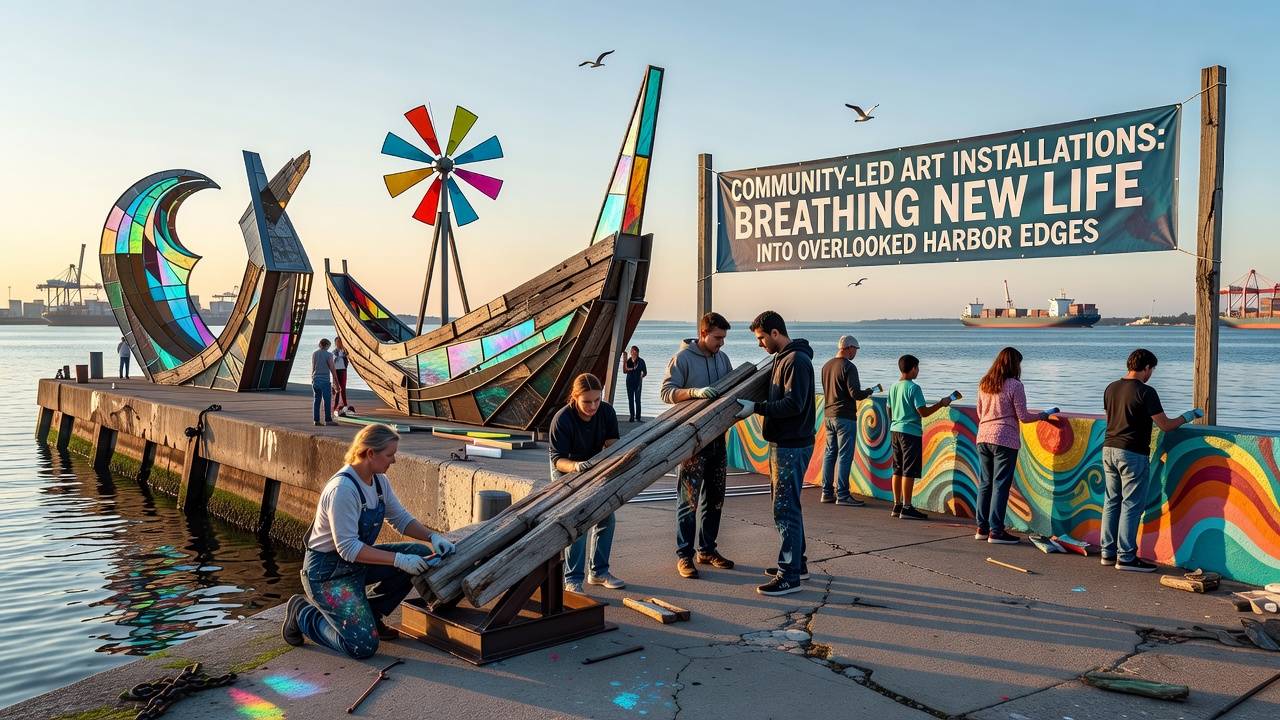
Observers in Hamburg recorded parallel developments when residents near the old Elbe docks formed a cooperative in 2019, secured permits from the Hamburg Port Authority, and unveiled three kinetic wind sculptures the following year. Figures released by the authority indicate that maintenance costs for these structures remain lower than traditional lighting systems because the community group handles routine inspections and minor repairs.
Methods Communities Use
Groups typically begin with site audits that catalog existing concrete pilings, rusting cranes, and tidal patterns, then match those elements to art forms that can withstand salt air and seasonal flooding. In many cases artists contribute technical expertise while residents supply oral histories that become embedded in the finished pieces, such as etched plaques listing former dockworkers or sound installations that play recorded ship horns at intervals tied to the tide schedule.
Funding often combines small grants from regional arts councils with crowdfunding campaigns that list specific materials like reclaimed timber or solar panels. One project in Fremantle, Australia, raised its budget through a combination of state heritage funds and a local business levy that directed a portion of mooring fees toward public art. Completion timelines stretch from nine months for modular sculptures to three years when structural engineering reviews are required.
Documented Outcomes in Multiple Regions
City records from Baltimore show that the 2023 installation of a community-designed floating platform garden coincided with a 14 percent rise in weekend ferry passengers during the first full year of operation. Similar data collected by the Port of Singapore Authority recorded higher numbers of educational tours after residents added interactive tide-pool sculptures to a previously restricted jetty area in 2024.
Academic papers published in the Journal of Urban Cultural Studies track changes in property values and vacancy rates near these sites, although researchers caution that isolating the effect of art alone requires longer observation periods. In October 2026 the city of Oslo plans to open a new community-managed light installation along the Akerselva river mouth, timed to coincide with the annual harbor festival and expected to include sensor-triggered projections that respond to passing vessels.
Challenges and Adjustments
Weather exposure remains a recurring issue, and several groups now incorporate sacrificial elements designed to erode gradually, turning the aging process into part of the artwork. Permitting processes vary by jurisdiction, yet communities that partner early with port authorities report fewer delays because engineering reviews occur before fabrication begins. Maintenance agreements often specify shared responsibility, with the city providing heavy equipment access while volunteers handle cleaning and seasonal adjustments.
Conclusion
Community-led art installations continue to appear along overlooked harbor edges in cities across multiple continents, supported by documented increases in public use and coordinated maintenance models. Records from port authorities, university studies, and municipal reports indicate that these projects integrate local knowledge with artistic practice, and upcoming openings such as the one scheduled in Oslo for October 2026 will provide additional data points for ongoing evaluation.